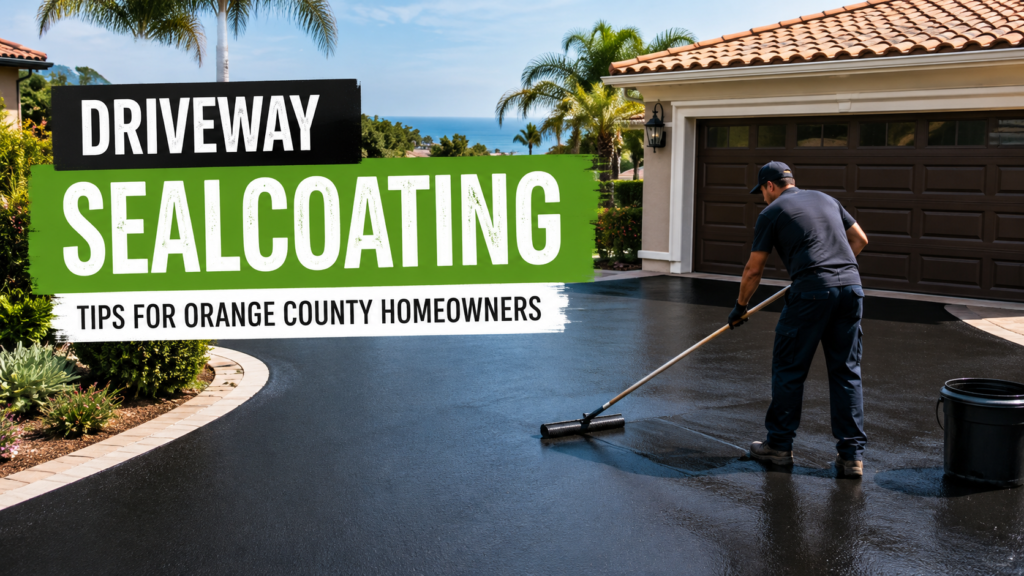
Sealcoating is often thought of as a way to make an asphalt driveway look freshly paved again, restoring that deep black color that fades over time. While the appearance boost is a nice side effect, sealcoating actually serves a much more important structural purpose. It creates a protective barrier between the asphalt surface and the elements that gradually break it down, including UV rays, moisture, and oils. For homeowners in Orange County, where driveways face intense year-round sun exposure, understanding how Driveway Sealcoating Orange County works and when to apply it can make a meaningful difference in how long a driveway lasts before needing significant repair.
What Sealcoating Actually Protects Against
Asphalt is a petroleum-based material, and like most petroleum products, it gradually breaks down when exposed to sunlight and oxygen over time, a process known as oxidation. As asphalt oxidizes, it becomes more brittle and prone to cracking. Sealcoating slows this process by shielding the surface from direct UV exposure. Beyond sun protection, sealcoating also helps guard against water infiltration, since asphalt has naturally porous characteristics that allow moisture to seep in over time if left unprotected, and against damage from oil, gasoline, and other automotive fluids that can break down the asphalt binder if left to soak into the surface.
How Often Should a Driveway Be Sealcoated
Most paving professionals recommend sealcoating a residential driveway every two to three years, though the right interval depends on a few factors specific to each property. A newly installed asphalt driveway typically needs to cure for a period, generally six to twelve months, before its first sealcoat application, allowing the asphalt oils to stabilize properly before being sealed. After that initial application, driveways exposed to consistently intense sun, a common condition throughout much of Orange County, may benefit from sealing closer to the two-year mark rather than waiting the full three years, since UV exposure is one of the primary factors that accelerates the need for reapplication.
Signs a Driveway Is Due for Sealcoating
Homeowners don’t need any special training to recognize when a driveway is due for sealcoating. A few visual cues typically indicate it’s time:
- The surface has faded from a rich black color to a dull gray
- Small surface cracks have started to appear, even if they aren’t yet significant
- Water no longer beads on the surface but instead appears to soak in
- The asphalt feels dry or slightly rough to the touch rather than having a smooth, slightly flexible feel
Catching these signs early, before cracking becomes widespread, generally makes for a more effective sealcoating application and helps avoid the more extensive repairs that come with delayed maintenance.
Preparing a Driveway Before Sealcoating
Proper preparation has a significant impact on how well a sealcoat application performs and how long it lasts. This typically includes:
- Clearing the driveway of any debris, leaves, or loose dirt
- Addressing any oil stains or grease spots with an appropriate degreasing product, since sealcoat won’t adhere properly over contaminated areas
- Filling any existing cracks before sealing, so the sealcoat isn’t simply applied over damage that will continue to worsen underneath
- Allowing the surface to fully dry after cleaning, since sealcoat needs a dry surface to bond correctly
Skipping these preparation steps is one of the most common reasons a sealcoat application fails prematurely or doesn’t achieve full coverage.
Ideal Weather Conditions for Sealcoating
Temperature and weather conditions play a significant role in how well sealcoat cures and bonds to the asphalt surface. Most sealcoat products require a temperature range of roughly 50 to 90 degrees Fahrenheit for proper application and curing, along with at least 24 to 48 hours without rain following application. Orange County’s climate, with its generally mild, dry conditions for much of the year, offers a wide window for sealcoating projects, though scheduling around the hottest stretches of summer, when surface temperatures can climb significantly, is often preferable to ensure the product cures evenly rather than drying too quickly on the surface.
Common Questions About Driveway Sealcoating
How long does it take for sealcoat to cure?
Sealcoat typically becomes safe for foot traffic within a few hours of application, but vehicle traffic should generally be kept off the surface for at least 24 to 48 hours to allow the coating to fully cure and bond properly.
Can sealcoating be applied too often?
Yes. Applying sealcoat more frequently than necessary, such as every single year, can actually lead to a buildup of material that becomes prone to cracking and peeling. Following a two-to-three-year interval, adjusted based on sun and traffic exposure, generally produces better long-term results than sealing too frequently.
Does sealcoating fix cracks or potholes?
Sealcoating itself is a protective surface treatment, not a structural repair. Existing cracks generally need to be filled separately before sealcoating, and any potholes or areas of significant damage typically require patching or more extensive repair, since sealcoat alone won’t restore structural integrity to compromised pavement.
Is DIY sealcoating a good option?
While sealcoat products are available for homeowner application, achieving even coverage and proper adhesion requires specific technique, including surface preparation, application thickness, and drying time management. Uneven application can lead to areas that wear unevenly or fail to bond properly, which is why many homeowners opt for professional application, particularly for larger driveways.
Why Orange County’s Climate Makes Sealcoating Especially Worthwhile
While freeze-thaw cycling is less of a concern in Orange County’s climate compared to colder regions, the intense and consistent UV exposure common to Southern California creates its own set of challenges for asphalt durability. Without the protective barrier that sealcoating provides, asphalt in this climate tends to oxidize and become brittle more quickly than it would in a milder, cloudier climate. This makes routine sealcoating a particularly worthwhile investment for Orange County homeowners looking to protect their driveway from the specific wear patterns caused by sustained sun exposure.
Extending the Life of a Sealcoat Application
A few simple habits help sealcoat perform at its best for as long as possible. Sweeping the driveway regularly to remove debris and dirt prevents abrasive material from wearing down the coating prematurely. Promptly addressing any oil or fluid leaks from vehicles keeps petroleum products from breaking down the sealant. Avoiding sharp turns or dragging heavy objects across the surface, particularly in the weeks immediately following application, helps the coating cure without disruption.
Understanding What’s Actually in a Sealcoat Product
Not all sealcoat products are formulated identically, and understanding the basic composition can help homeowners make sense of what they’re applying to their driveway. Most sealcoat products fall into one of two main categories: coal tar-based sealers, which have historically been popular for their durability and resistance to petroleum products, and asphalt-based (or emulsion) sealers, which have grown in popularity partly due to fewer restrictions in certain municipalities and generally lower environmental impact during application. Many sealcoat products also incorporate sand or other aggregate additives, which improve traction on the finished surface and help the coating resist wear from foot and vehicle traffic. Some homeowners aren’t aware that local regulations in certain areas restrict or ban coal tar sealers specifically, so it’s worth understanding which type of product is being used and whether any local restrictions apply.
How Sealcoating Fits Into the Asphalt Lifecycle
It helps to think of sealcoating as one part of a broader maintenance rhythm rather than an isolated task performed occasionally. A newly installed driveway goes through an initial curing period, generally six to twelve months, before its first sealcoat application. After that, sealcoating on a consistent two-to-three-year cycle, paired with prompt crack repair as small issues appear, works together to slow the natural aging process asphalt undergoes. Skipping sealcoating for many years in a row doesn’t just mean a driveway looks more faded, it typically means the asphalt has been absorbing UV damage and moisture unprotected for that entire stretch, which often shows up later as more extensive cracking that requires patching rather than simple sealing to address.
The Application Process Itself
For homeowners curious about what a professional sealcoating application actually involves, the process generally follows a consistent sequence. After thorough cleaning and any necessary crack filling, the sealcoat material is typically applied using either a spray system or a squeegee-based hand application, depending on the contractor’s equipment and the specific characteristics of the driveway. Most professional applications involve two coats rather than one, allowing the first layer to begin drying before the second is applied, which generally produces more even, durable coverage than a single thick application. Edges and any areas around expansion joints or drainage points often receive extra attention to ensure the coating properly seals those transition areas where water intrusion is more likely to occur.
Building Sealcoating Into a Broader Maintenance Routine
Sealcoating works best as part of a broader driveway maintenance approach rather than as a standalone fix. Pairing routine sealcoating with prompt crack repair and periodic inspection for early signs of wear creates a maintenance rhythm that meaningfully extends a driveway’s usable life. For homeowners exploring driveway sealcoating in Orange County, understanding the timing, preparation, and climate-specific considerations involved provides a solid foundation for keeping a driveway protected year after year.